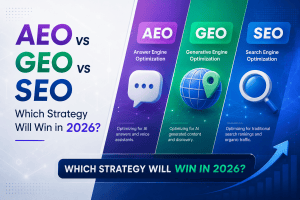
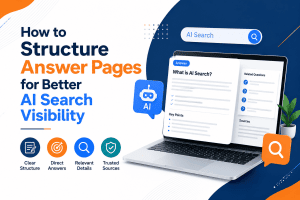
Search engines are changing—and it’s happening fast. They are getting ridiculously smart with AI, which means those old-school SEO tactics and strategies won’t work.
Businesses that want to stay visible need to adapt, plain, and simple. We’re breaking down five crucial AI SEO tactics here to optimize your site for AI-powered search. Running an e-commerce shop, managing a law firm, and handling a local business— it doesn’t matter. These AI-driven SERP strategies will help you get seen and actually trusted by both people scrolling on their phones and the machines ranking your content.
Understanding AI-Powered Search Engines
Today’s search engines stopped just matching keywords ages ago. Ask any leading SEO consultant or audit expert, and they’ll tell you that they’re using AI to understand the bigger picture—what’s the context, what do people actually need, and what are they really asking for.
Here’s what’s different now:
- Your entire page gets read and evaluated, not just a few keywords you sprinkled around hoping for the best.
- Search engines look for stuff that’s authoritative, credible, genuinely useful—nobody’s falling for keyword-stuffed nonsense anymore.
- You’ll notice “rich results,” snippets, and those overview answers sitting at the top instead of the traditional 10 blue links we all remember.
This shift makes AI search optimization (some people call it SEO for AI search) essential now. It takes the classic SEO basics and combines them with newer tactics that fit how AI looks at content.
Optimize for AI Snippets and Overviews
The biggest thing that’s changed with AI-powered search is that featured snippets, “people also ask” boxes, and overview answers now pop up right at the top of search results. These aren’t just random. They go to content that’s organized well, gets to the point, and actually helps people out.
Here’s your playbook for optimizing:
| Tactic | Why It Matters | Quick Tip |
| Use clear question-and-answer format | AI grabs answers for snippet boxes from direct Q&A style sections all the time | Structure chunks of your content as “What is…?”, “How do I…?”, or similar question-based headers |
| Write concise, helpful summaries (40–60 words) at the start of sections | AI picks up on crisp definitions and straight answers at the beginning | Start key sections with quick, clear answers, then expand with detail |
| Use sub-headings (H2, H3) and bullet or numbered lists | Way easier for AI to break down content into pieces it understands | Break complicated ideas into lists and shorter, well-labeled sections |
| Include relevant keywords but don’t overstuff | Aligns with what people search for without sounding unnatural | Use natural phrasing around terms like AI SEO tactics or AI search optimization.” |
| Provide up-to-date, accurate information with context/explanation | Shows AI systems you’re credible and knowledgeable | Add fresh insights, recent data, or explanations instead of reusing generic info |
When you focus on being clear, structuring things well, and answering questions directly, you increase your shot at showing up in AI-driven SERP strategies. And that kind of visibility? It brings in traffic from people who actually want what you’re offering.
Building E-E-A-T for Trust & Credibility
With AI SEO tools running the show, search engines put serious weight on experience, expertise, authoritativeness, and trust—the whole E-E-A-T thing. Your site needs way more than keywords to rank well now—it needs actual credibility.
Here’s how you build that:
- Show real credentials and experiences. Running a business site? Mention how many years you’ve been around, clients you’ve worked with, and industries you know inside out.
- Provide detailed, genuinely helpful content. Depth counts for something. Detailed guides that go deep, breakdowns that make people think, examples that hit home—this stuff proves you actually know what you’re doing.
- Use data or case results when you can. Real numbers or anonymized results back up your claims and show you actually deliver.
- Be transparent about what you’re offering. Clearly spell out your services, your approach, and what clients can realistically expect from you.
Leveraging Schema for Smarter Indexing
Content structure and quality help AI read and trust your site, sure. But using technical tools like schema markup? That helps search engines index and actually understand your content way more precisely.
Schema markup for AI is basically code helping search engines identify what different parts of your page mean—like, is this an FAQ? An address? A product listing? A customer review?
Why it matters:
- Gets your site showing up in rich results—FAQ boxes, business cards, star ratings, all that good stuff.
- Makes your content easier for AI to parse, which bumps up chances of appearing in AI-powered summaries.
- Adds clarity when search engines try figuring out who you are, what you’re selling, and where you operate.
- Even for a straightforward service business site, adding schema for business info, services, reviews, and FAQs makes a real difference.
Tools to Track AI-Driven Search Visibility
As SEO keeps evolving, you’d be smart to track how AI-driven changes mess with your presence. Here are useful tools and metrics worth watching:
- Rank-tracking tools measure whether you’re showing up in featured snippets, “people also ask,” and other rich results.
- Analytics for click-through rate (CTR)—if your snippet appears but nobody clicks, that’s screaming you need better content or more compelling titles.
- Heat maps or user-behavior tools—to check if users actually engage with your content, scroll down, click around, stick around, and read.
- Audit tools for page speed, mobile-friendliness, and schema validation—technical health still matters for both classic SEO and AI indexing.
Regular tracking shows you whether your content and optimization’s actually work, especially as AI-based Google ranking keeps changing.
Final Thoughts on the Shift to AI-Ready SEO
The search game has completely changed. Stuffing pages with keywords and crossing your fingers? That doesn’t work anymore. Today’s winners offer clarity, depth, trust—and structure their content so both real readers and AI systems get it.
That means: write for actual people first. Use structure, back up your claims with data, and be honest. Optimize the technical stuff. Stay aware of how AI reads what you’re putting out there.
Want to stay ahead of this curve? A smart move is partnering with an SEO agency that already knows how to navigate this new landscape.
Cheenti Digital offers expert SEO service, Content Marketing, Web Design and Development, PPC, and more, tailoring AI-driven SERP strategies to what each client actually needs.
Why AI-SEO Matters More Than Ever
AI’s completely reshaping how search works, no question about it. Businesses trying to get noticed and earn trust? Following those old SEO playbooks won’t get you anywhere anymore. What brings real success now is creating content that genuinely helps people and earns credibility—content that’s organized and fine-tuned for both actual humans browsing on their phones and the AI systems deciding what ranks where.
Thinking about bringing in professional help? Our team at Cheenti Digital has decades of experience; we run everything on data, and we’ve got the full package of services to walk businesses through these AI-driven search shifts. Whether your business is in Dallas , Miami, Colorado Spring, Raleigh , San Diego , Los Angeles , California , New York ,North Carolina , Houston ,Chicago working with experienced SEO consultants might be exactly what keeps you visible, trusted, and one step ahead of everyone else competing for attention.
Contact our team today for a customized digital marketing and SEO strategy with our local SEO packages that deliver real results.